
Spray Foam vs. TPO Roofing: Why Commercial Building Owners Are Choosing Spray Foam
Spray Foam vs. TPO Roofing: Why Commercial Building Owners Are Choosing Spray Foam
Discover how spray polyurethane foam roofing can help commercial property owners reduce energy costs, eliminate troublesome seams, and avoid expensive roof replacements.
When it comes to commercial flat roofing, two popular options are Thermoplastic Polyolefin (TPO) and Spray Polyurethane Foam (SPF). While TPO has become a common roofing material for commercial buildings, many property owners are discovering that spray foam roofing offers significant advantages in energy efficiency, waterproofing, long-term maintenance, and overall cost of ownership.
At Draper Construction & Commercial Roofing, we believe a commercial roof should do more than simply keep water out. It should protect your investment, improve your building’s energy efficiency, minimize disruptions to your business, and provide lasting value.
That’s why we specialize in high-performance spray polyurethane foam roofing and protective coating restoration systems.
Whether you’re dealing with an aging TPO roof, recurring leaks, rising energy bills, or an expensive roof replacement proposal, there may be a better solution.
What Is the Difference Between TPO and Spray Foam Roofing?
TPO roofing is a single-ply membrane system commonly installed on commercial flat and low-slope roofs. It consists of large sheets of thermoplastic material that are mechanically attached, adhered, or otherwise secured to the roof assembly. The sheets are joined together using heat-welded seams.
When properly designed, installed, and maintained, TPO can provide effective waterproofing and energy-efficient reflective roofing.
However, every seam, penetration, drain, and flashing detail requires careful installation and ongoing attention.
Spray Polyurethane Foam (SPF) roofing takes a different approach.
SPF is a liquid-applied roofing material that expands into a rigid, closed-cell foam, forming a continuous layer across the roof surface. A protective elastomeric coating is then applied to protect the foam from ultraviolet exposure and weathering.
The result is a lightweight, insulated, seamless roofing system that can be maintained and renewed for decades.
1. Seamless Waterproofing: Fewer Vulnerable Areas for Leaks
One of the most significant differences between SPF and TPO roofing is how each system handles seams.
TPO roofing relies on heat-welded seams to connect individual sheets of membrane. Although properly welded seams can perform very well, they remain areas that must be inspected and maintained throughout the roof’s service life.
SPF roofing eliminates the need for field seams altogether.
Because spray foam is applied directly to the roof surface, it creates a continuous, monolithic roofing layer that conforms around pipes, HVAC curbs, penetrations, and other rooftop equipment.
Advantages of a seamless SPF roofing system include:
- No field membrane seams to separate or require heat welding
- Continuous coverage around roof penetrations
- Closed-cell foam that resists water migration
- Reduced dependence on mechanical fasteners
- The ability to improve drainage through properly designed foam application
- Easier localized repairs when damage occurs
For commercial building owners dealing with persistent leaks, these benefits can make a tremendous difference.
At Draper Construction, our goal isn’t simply to cover an existing roof problem. It’s to identify the source of the problem and develop a roofing solution that addresses it.
2. Energy Efficiency: Your Roof Should Help Lower Utility Bills
Commercial buildings can gain significant heat through their roofing systems, particularly during Oklahoma’s hot summers.
Spray polyurethane foam roofing provides two important energy-efficiency benefits: insulation and reflectivity.
High R-Value Insulation
Roofing-grade SPF can provide approximately R-6.25 per inch, depending on the product and installation.
Unlike TPO membrane, which does not provide meaningful insulation by itself, spray foam incorporates insulation directly into the roofing material.
Its continuous application can also reduce thermal bridging and gaps associated with some conventional roofing assemblies.
Reflective Roof Coatings
SPF roofing systems are protected with high-performance elastomeric coatings, including reflective white coatings.
These coatings can reflect a substantial portion of the sun’s energy, helping reduce roof surface temperatures and cooling demands.
Depending on the building’s existing insulation, climate, HVAC equipment, and roof conditions, an SPF roofing system may help:
- Reduce cooling costs
- Improve interior comfort
- Reduce heat transfer through the roof
- Improve overall building energy performance
- Lower long-term operating expenses
For large commercial buildings, warehouses, manufacturing facilities, schools, and retail centers, improved energy efficiency can translate into meaningful savings over time.
A roof should be considered an investment in your building’s performance, not simply another maintenance expense.
3. Avoid Expensive Tear-Offs: Your Existing Roof May Be Restorable
One of the biggest expenses associated with commercial roof replacement is removing and disposing of the existing roofing materials.
Traditional replacement projects may require removing large amounts of membrane, insulation, and other roofing components before installing the new system.
This adds labor, disposal costs, project time, and potential disruption to building operations.
The good news? Your existing commercial roof may not need to be completely removed.
Depending on its condition, an SPF roofing system may be installed over an existing roof after proper inspection, preparation, and necessary repairs.
Draper Construction specializes in evaluating existing roofing systems and determining whether restoration is a practical alternative to replacement.
We work with a variety of commercial roofing substrates, including:
- Existing TPO and EPDM roofing
- Modified bitumen roofing
- Built-up roofing systems
- Metal roofing
- Existing spray polyurethane foam roofs
- Other compatible commercial roofing assemblies
Not every roof qualifies for restoration. Excessive trapped moisture, deteriorated materials, structural concerns, or adhesion issues may require partial or complete removal.
Our team evaluates these conditions before recommending a system.
Why pay for a complete roof replacement if a professionally designed restoration system can provide the protection your building needs?
4. Renewable Roofing: A Long-Term Advantage Over Traditional Replacement
One of the most valuable features of spray polyurethane foam roofing is its renewability.
Many conventional commercial roofing systems eventually require substantial replacement when they reach the end of their service life.
SPF roofing systems are different.
With proper installation, maintenance, and periodic recoating, the existing foam can remain in service through multiple coating cycles.
Instead of tearing off and replacing the entire roofing system, a properly maintained SPF roof may only require:
- A professional roof inspection
- Cleaning and surface preparation
- Localized repairs where necessary
- Application of a new protective coating system
This renewal process can extend the useful life of the existing roof while avoiding the expense and waste associated with a complete replacement.
Renewable 10-, 15-, and 20-Year Warranty Options
Draper Construction offers qualifying roofing restoration systems with manufacturer-backed warranty options of 10, 15, or 20 years, depending on the selected system and project requirements.
At the end of the warranty period, a properly maintained roof may qualify for recoating and an additional warranty period.
Imagine owning a commercial roof that can be renewed instead of repeatedly replaced.
That’s the long-term value of a properly designed SPF roofing system.
5. Less Weight, Less Waste, and Less Business Disruption
Commercial roof replacement can create significant logistical challenges.
Removing existing roofing materials requires additional labor, equipment, dumpsters, and transportation. Depending on the building, the work may also affect employees, tenants, customers, and daily operations.
Spray polyurethane foam roofing is extremely lightweight, making it an attractive option for many commercial restoration projects.
When the existing roof is suitable for restoration, SPF can often be installed without a complete tear-off.
This can result in:
- Less material entering landfills
- Reduced demolition and disposal expenses
- Fewer disruptions to normal business activities
- Shorter installation schedules on suitable projects
- Less additional weight compared with many conventional roofing assemblies
On existing tar-and-gravel roofs, removing heavy gravel and replacing it with a lightweight SPF roofing system can also significantly reduce roof dead load, depending on the final assembly.
At Draper Construction, we understand that your business needs to keep operating while your roof is being repaired or restored.
Our team works to develop solutions that protect your building while minimizing unnecessary disruption.
6. Spray Foam vs. TPO Roofing: Side-by-Side Comparison
| Feature | TPO Roofing | SPF Roofing |
|---|---|---|
| Waterproofing | Requires separate insulation | Built-in insulation, approximately R-6.25 per inch |
| Roof penetrations | Require flashing and welded details | Conforms around penetrations |
| Reflectivity | Reflective options available | Reflective protective coatings available |
| Installation over existing roofs | Possible on qualifying roofs | Possible on qualifying roofs |
| Weight | Lightweight | Very lightweight |
| End-of-life options | Repair, coating, recover, or replacement depending on condition | Repair and recoat when suitable |
| Renewable warranties | Varies by manufacturer and system | 10-, 15-, and 20-year options |
| Long-term costs | Depends on installation and replacement cycles | Potential savings through maintenance and recoating |
The biggest advantage of SPF isn’t just how it performs when it’s installed. It’s how the roof can be maintained and renewed over its lifetime.
7. Why the Roofing Contractor Matters Just as Much as the Roofing System
Not all spray foam roofing contractors have the same level of training, certification, experience, or quality-control procedures.
SPF roofing is a specialized application that requires proper equipment, material temperatures, substrate preparation, environmental monitoring, spray techniques, and protective coating application.
An improperly installed SPF roof can experience serious performance problems.
That’s why choosing a qualified contractor is critical.
The Draper Construction Difference
Draper Construction & Commercial Roofing is proud to be recognized for our commitment to quality, training, and excellence in commercial roofing.
Our qualifications and recognition include:
- Oklahoma’s only SPFA PCP Accredited Roofing Contractor
- One of a select group of SPFA PCP Accredited Roofing Contractors nationwide
- SPFA-certified roofing professionals and applicators
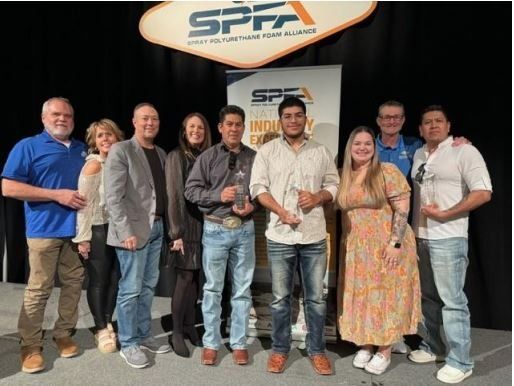
- Multiple Spray Polyurethane Foam Alliance National Industry Excellence Awards
- 2026 SPFA National Industry Excellence Award Winner — Roofing Under 40,000 Square Feet
- CoatingsPro Contractor Award recognition
- Everest Systems Diamond Level Approved Applicator
- Roof Coatings Manufacturers Association (RCMA) Member
- Oklahoma roofing license and commercial endorsement
- A+ Better Business Bureau rating
- 5-star Google customer reviews
- Featured in national roofing industry publications, including Spray Foam Professional and CoatingsPro Magazine
Our certifications and industry recognition represent more than awards. They reflect our investment in training, proper installation practices, high-performance roofing systems, and long-term customer relationships.
When you hire Draper Construction, you’re choosing a nationally recognized roofing contractor committed to doing the job right.
8. What If You Already Have a TPO Roof?
If your commercial building currently has a TPO roof that is aging, leaking, or approaching the end of its warranty, don’t assume a complete TPO replacement is your only option.
Depending on the existing roof’s condition, an SPF and coating restoration system may provide a cost-effective alternative.
Draper Construction can evaluate your existing roofing system, identify problem areas, and help determine whether restoration makes financial and technical sense.
Our assessment considers existing moisture, substrate integrity, drainage, roof penetrations, and compatibility with the proposed system.
If restoration is appropriate, we can recommend a system designed around your building’s needs and long-term ownership goals.
If the roof is too deteriorated or saturated to restore reliably, we’ll explain why and help you understand the alternatives.
We believe the best roofing recommendation is the one that’s right for your building—not simply the most expensive option.
Frequently Asked Questions About Spray Foam vs. TPO Roofing
Is spray foam roofing better than TPO?
Both systems can perform well when properly designed and installed. SPF offers particular advantages in seamless waterproofing, continuous insulation, and long-term renewability. The best choice depends on your roof’s condition, building requirements, budget, and long-term goals.
Can spray foam be installed over an existing TPO roof?
Yes, in certain situations. The existing roof must be evaluated for moisture, adhesion, substrate condition, compatibility, and code requirements. Proper preparation and manufacturer-approved application methods are essential.
How long does a spray foam roof last?
A professionally installed SPF roofing system can remain in service for decades when properly maintained and periodically recoated. The protective coating must be inspected and renewed as needed to preserve the underlying foam.
Is spray foam roofing energy efficient?
Yes. Roofing-grade SPF provides approximately R-6.25 of insulation per inch, and reflective protective coatings can help reduce solar heat absorption. Actual energy savings depend on building-specific conditions.
Is spray foam roofing less expensive than TPO?
Initial installation costs vary depending on the existing roof, insulation requirements, project size, and selected system. SPF restoration may reduce costs by avoiding a complete tear-off. Long-term savings may also result from energy efficiency and the ability to renew the roof through recoating.
Does spray foam roofing come with a warranty?
Yes. Draper Construction offers qualifying SPF roofing and coating systems with 10-, 15-, and 20-year manufacturer-backed warranty options, subject to the selected system and manufacturer requirements.
Can a commercial spray foam roof withstand Oklahoma weather?
Properly designed and installed SPF roofing systems can provide excellent performance in Oklahoma’s demanding weather conditions, including heat, wind, hail, and heavy rainfall. System selection, protective coating, installation quality, and maintenance all affect performance.
Don’t Replace Your TPO Roof Until You Explore Your Options
If your commercial roof is leaking, aging, or nearing the end of its warranty, you may have more options than you realize.
A complete roof replacement isn’t always necessary.
At Draper Construction & Commercial Roofing, we specialize in helping commercial building owners make informed roofing decisions that protect their properties and their budgets.
From spray polyurethane foam roofing and elastomeric coatings to metal roof restoration and existing roof recovery systems, our goal is to provide lasting solutions backed by proven products, professional installation, and exceptional service.
Before you invest in another TPO roof, find out whether a seamless, energy-efficient, renewable spray foam roofing system could be the better investment.
Schedule Your Commercial Roof Evaluation Today
Contact Draper Construction & Commercial Roofing to discuss your roof’s condition and explore available restoration options.
Visit www.draper.construction
Draper Construction & Commercial Roofing
Nationally Recognized. Professionally Certified. Committed to Excellence.
Experience #TheDraperDifference
Happy To Do It :-)