
Protection That Extends Metal Panel Lifespan
Metal Roof Coating in Oklahoma City for panels showing rust formation or failing sealant integrity
Draper Construction & Commercial Roofing applies elastomeric and silicone coatings to metal roofing systems across Oklahoma City, creating a seamless membrane that stops rust progression and seals fastener penetrations. This system works for facilities where panel replacement isn't yet necessary but corrosion has started to compromise weather-tightness. Once the coating cures, you'll see a uniform surface that sheds water completely and reflects UV radiation that would otherwise accelerate metal fatigue.
Metal panels corrode fastest at fastener points and overlapping seams where moisture becomes trapped between layers, particularly in Oklahoma's humid spring and summer months when condensation cycles repeat daily. Coating systems fill these vulnerable gaps with a flexible barrier that moves with thermal expansion rather than cracking under temperature swings that routinely exceed forty degrees between night and day.
Request a roof assessment to determine which coating chemistry matches your current panel condition and exposure level.
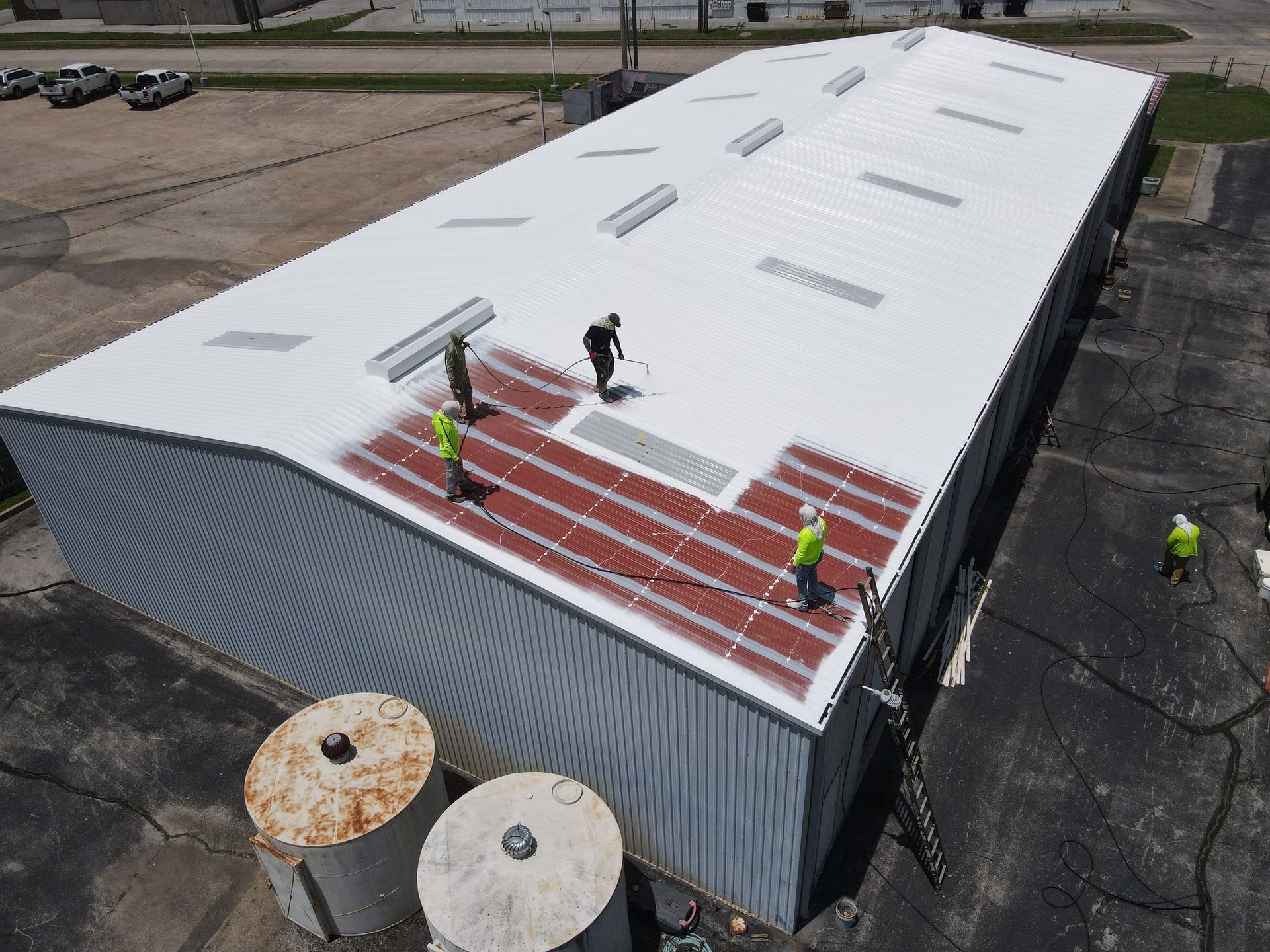
Commercial roof coatings
Save money, get years of service
Call (405) 972-5199
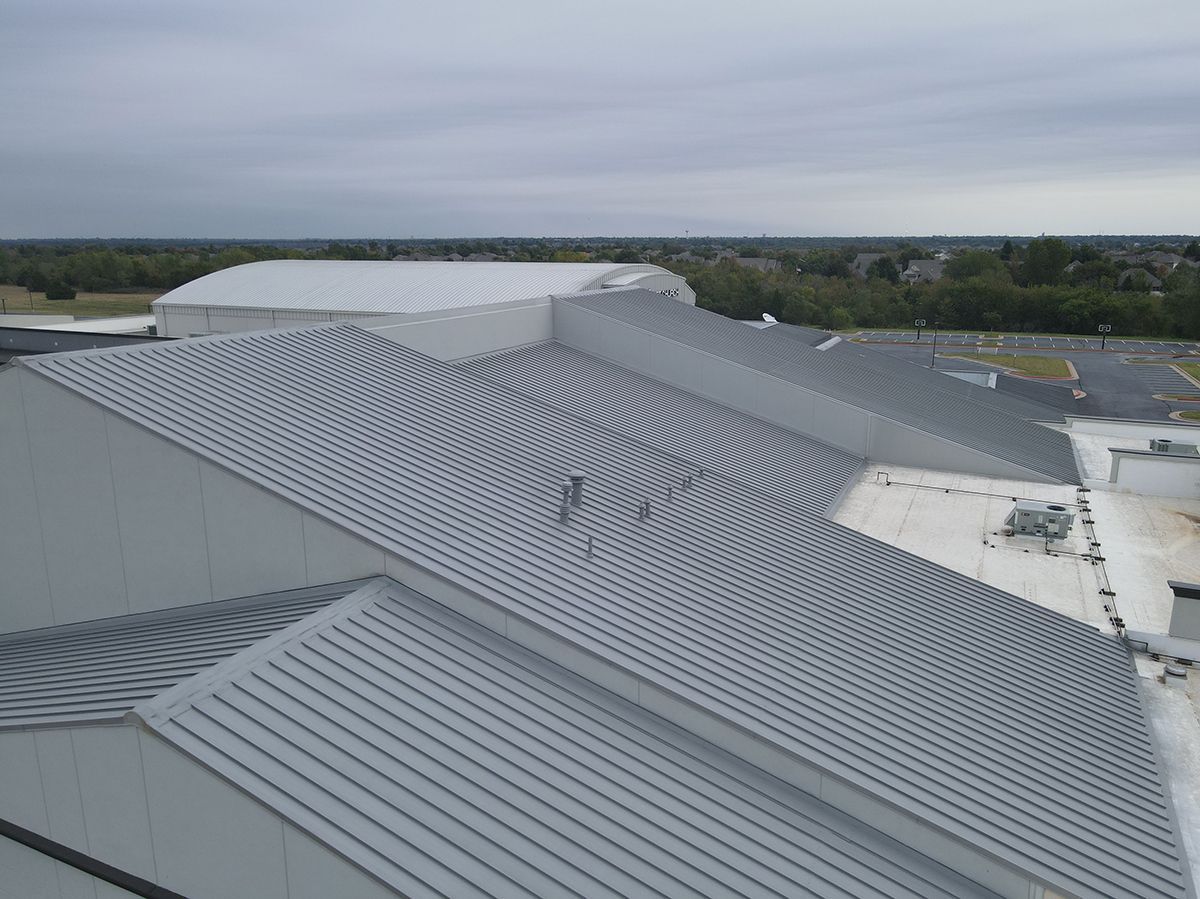
How Coating Application Stops Ongoing Corrosion
Surface preparation removes loose rust and mill scale using power washing at three thousand PSI, followed by solvent wiping to eliminate contaminants that prevent adhesion. Primers designed for galvanized or bare steel are applied first, creating a chemical bond that the topcoat layer anchors into. Topcoat thickness typically reaches twenty mils dry film, which provides enough body to bridge small gaps while remaining flexible enough to accommodate metal movement.
After the coating cures fully, typically within seventy-two hours depending on humidity levels, water beads and runs off the roof rather than pooling in low spots or seeping through fastener holes. Rust stains stop spreading because oxygen and moisture can no longer reach the underlying metal. The reflective finish reduces surface temperatures by as much as thirty degrees compared to bare or painted metal, which slows down the thermal cycling that fatigues panels over time.
Coating systems don't repair structural rust-through or correct improper slope issues, but they halt surface corrosion before it reaches that stage. Facilities with equipment anchored through the roof benefit from resealing around those penetrations as part of the coating process, eliminating leak points that standard caulking can't maintain long-term.
Questions Property Managers Ask Before Coating
Coating selection depends on metal type, existing rust levels, and whether you're prioritizing reflectivity or maximum adhesion in an industrial environment where chemical exposure occurs.
What level of rust disqualifies a roof from coating?
Surface rust and light pitting can be coated after proper preparation, but panels with holes rusted completely through or structural weakness from severe corrosion require replacement before any coating system will perform as intended.
How does Oklahoma City's weather affect coating performance?
High humidity during spring and fall extends curing times and can cause blistering if coating is applied before morning dew evaporates completely, which is why application typically starts after ten in the morning once surface temperatures stabilize above sixty degrees.
What separates silicone from acrylic elastomeric coatings?
Silicone coatings resist ponding water better and maintain flexibility in extreme cold, making them preferable for low-slope metal roofs common on warehouse facilities, while acrylic systems offer better dirt resistance and easier recoating for buildings near unpaved areas that generate airborne dust.
How long does a coating system last before reapplication?
Most elastomeric systems provide ten to fifteen years of protection before requiring a maintenance coat, with lifespan depending on roof slope, exposure to industrial pollutants, and how thoroughly the surface was prepared during initial application.
What happens to existing roof coatings during the process?
Previous coatings are evaluated for adhesion using pull tests—if they're still bonded well, they're cleaned and recoated, but delaminated sections are stripped back to bare metal and primed separately to prevent future failure at those transition points.
Draper Construction & Commercial Roofing evaluates fastener condition and panel integrity before recommending coating as a restoration option. Schedule an on-site inspection to review your current metal roof condition and determine whether coating will add the years of service life your facility needs.