
Commercial Roofs Built for Extreme Weather
Spray Foam Roofing in Oklahoma for flat and low-slope buildings facing water infiltration and energy loss
Oklahoma's severe weather patterns create specific challenges for commercial roofing systems, particularly when hail damage, wind uplift, and rapid temperature swings compromise roof integrity. Draper Construction & Commercial Roofing applies spray polyurethane foam systems that bond directly to existing substrates, creating a seamless, monolithic barrier across the entire roof surface. This approach addresses both structural vulnerabilities and thermal performance issues common in buildings with flat or low-slope roof configurations throughout the region.
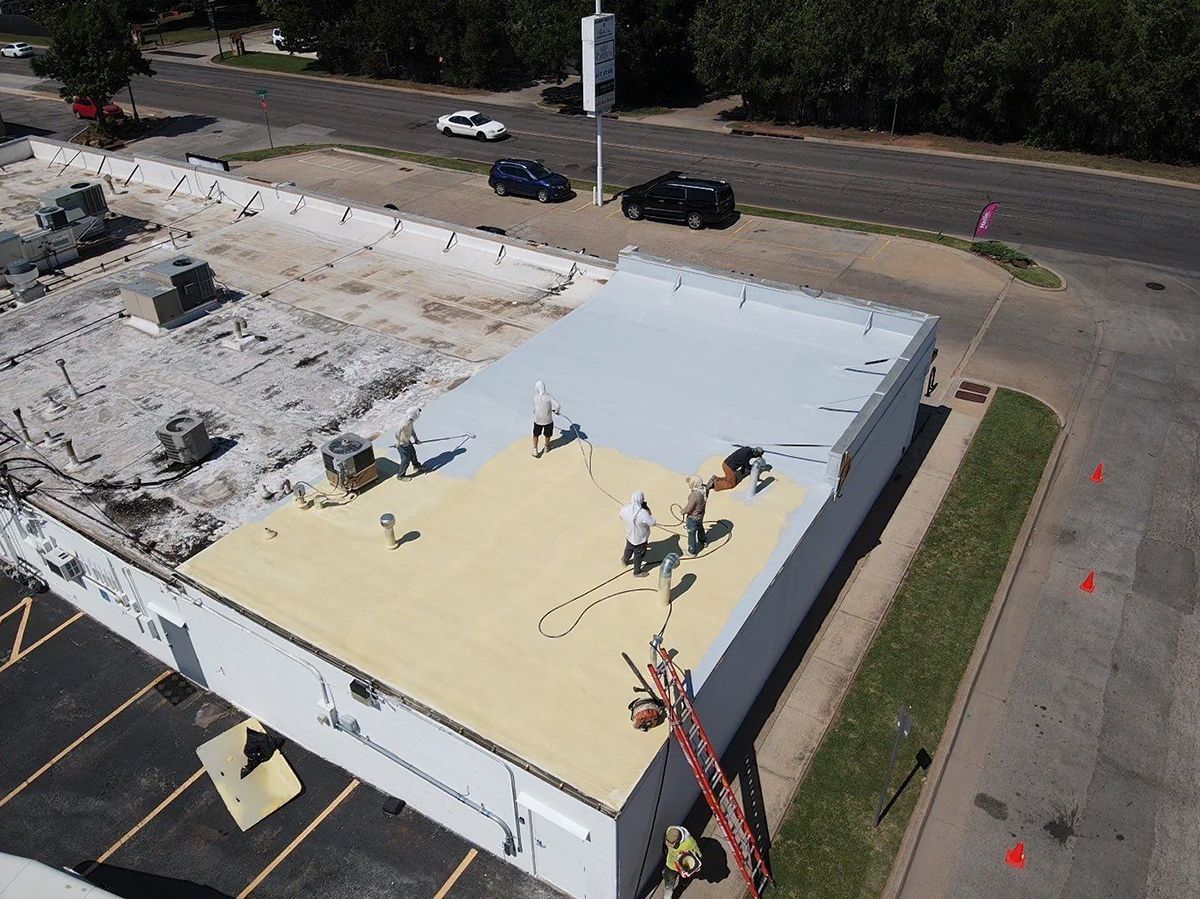
The installation process involves cleaning and preparing the existing roof surface, then applying expanding foam in controlled passes that build up to the specified thickness, typically between one and three inches depending on structural requirements and R-value targets. The foam cures within seconds, forming a rigid surface that conforms to roof penetrations, HVAC units, and parapet walls without creating seams or joints where water can penetrate.
Schedule a roof assessment to determine if your building's current system can support a spray foam application.
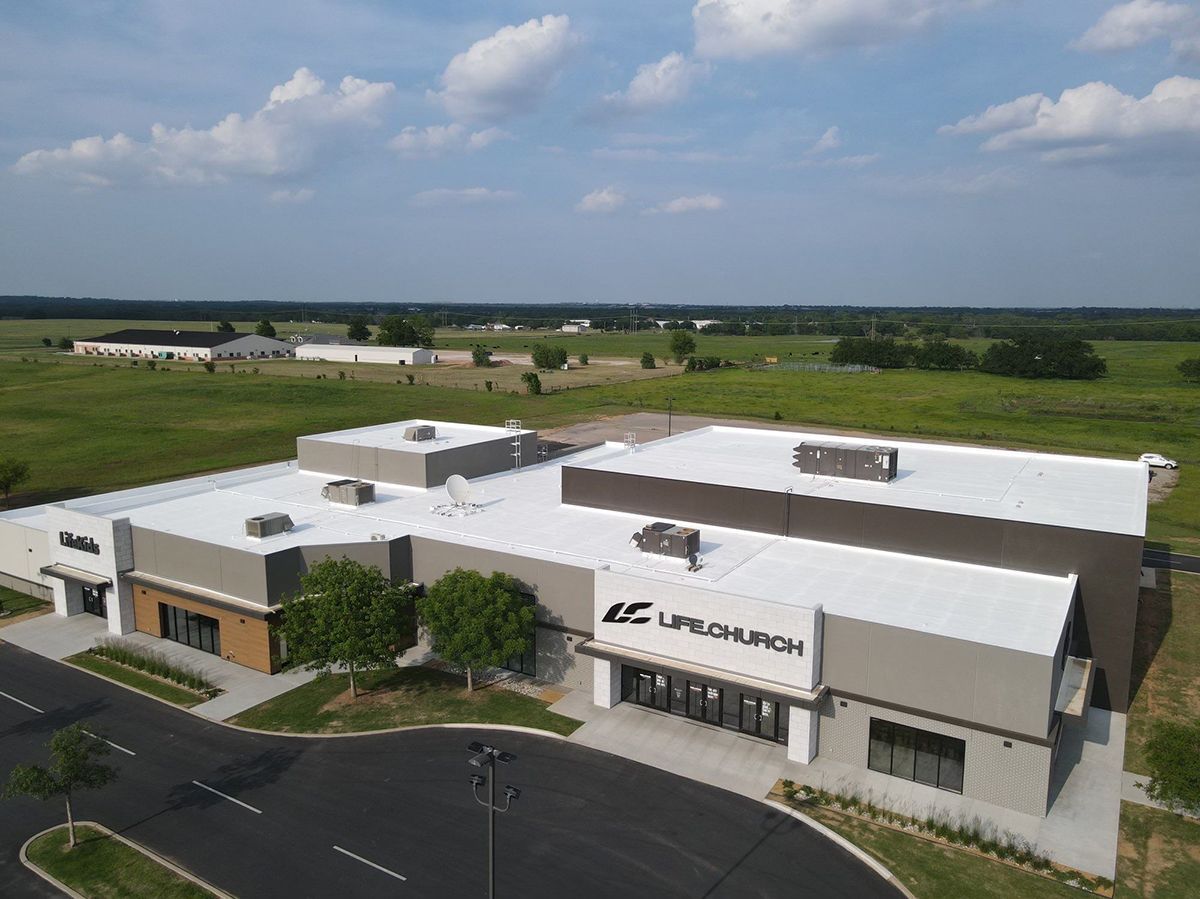
Get a long-lasting, energy efficient roof
With spray foam roofing
(405) 972-5199
What Spray Foam Actually Accomplishes
Spray polyurethane foam systems function as both insulation and waterproofing in a single application, expanding on contact to fill gaps around roof-mounted equipment and create positive drainage toward existing drains or scuppers. The closed-cell structure of the foam prevents moisture absorption, meaning the insulation value remains consistent even when exposed to Oklahoma's humidity fluctuations and seasonal storms.
After the foam reaches full cure and thickness, a protective elastomeric coating is applied to shield the foam from UV degradation and provide the final weather surface. You'll notice that roof leaks stop occurring around penetrations and seams, interior temperatures stabilize with less HVAC cycling, and the roof surface sheds water more effectively due to the slight crown created during foam application. Buildings with spray foam roofs often see measurable reductions in cooling costs during summer months when Oklahoma temperatures regularly exceed ninety degrees.
The system adds minimal weight to the existing structure compared to tear-off and replacement options, which matters when evaluating older commercial buildings with weight capacity limits. However, the existing roof must be structurally sound and dry before application begins, as foam cannot correct underlying deck damage or displace trapped moisture within the substrate.
What Property Owners Usually Ask
Commercial building managers and owners often have similar concerns when considering spray foam roofing systems for their properties.
How does spray foam hold up to Oklahoma hail storms?
We offer fully hail-rated roofing systems, but spray polyurethane foam (SPF) systems stand out as one of the best-performing options available. Our high-tensile coatings provide strong impact resistance, and for severe hail conditions, SPF systems offer an added level of protection. One of the biggest advantages of SPF is how it handles damage—if an impact does occur, water does not travel laterally through the system. This helps isolate issues, prevent widespread leaks, and keep repairs minimal compared to many traditional roofing systems.
What preparation does the existing roof require before foam application?
The surface must be clean, dry, and free of standing water, loose gravel, or deteriorated materials. Wet insulation or structural decking needs replacement before foam installation, as trapping moisture beneath the foam leads to continued deterioration and adhesion failure.
How long does a spray foam roof system last?
With proper maintenance and periodic recoating of the protective elastomeric layer every ten to twenty years, the foam substrate can remain functional for multiple decades. The seamless nature of the system means there are no fasteners or seams to fail over time.
Can spray foam be applied over an existing modified bitumen or TPO roof?
In most cases, yes, as long as the existing membrane is adhered and dry. This approach eliminates landfill waste from tear-off and reduces the project timeline compared to complete roof replacement.
What happens if a section of the roof needs repair later?
Damaged areas can be cut out and patched with new foam and coating without compromising the surrounding system. This makes localized repairs straightforward when roof penetrations are added or HVAC equipment is replaced.
Want to Learn More?
Download PDF GuideDownload our SPF Myths vs. Facts Guide
Draper Construction & Commercial Roofing evaluates your building's current roof condition and structural capacity before recommending spray foam application. Contact us to arrange an on-site inspection that includes moisture scanning and substrate assessment to determine if your roof is a suitable candidate for this system.