
Roofs Built to Handle Standing Water
Flat Roofs in Oklahoma City for commercial buildings experiencing ponding and membrane failure
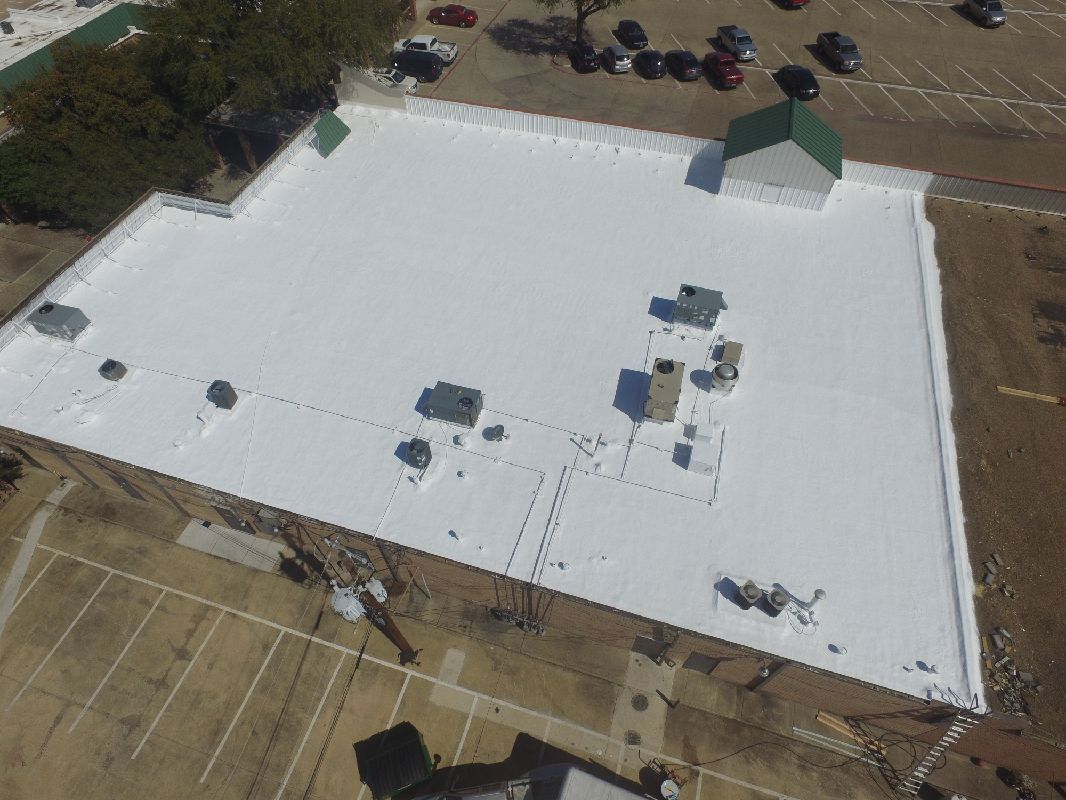
Draper Construction & Commercial Roofing applies spray foam insulation and protective roof coatings to flat roofs across Oklahoma City, addressing the water pooling and membrane deterioration that come with Oklahoma's heavy rain cycles and temperature swings. The spray foam system builds thickness over low-slope surfaces, creating drainage where standing water collects, while the coating layer seals against UV exposure and moisture infiltration. Commercial property owners dealing with recurring leaks, sagging roof sections, or visible water damage after storms rely on this combination to restore flat roof function without full tear-off.
Spray foam expands to fill gaps and creates a seamless insulation layer that adheres directly to existing roof decking, eliminating the seams where traditional membranes split. The coating applied over the foam forms a waterproof barrier that flexes with temperature changes instead of cracking. Oklahoma's freeze-thaw patterns and intense summer heat cause conventional flat roof materials to fail at seams and fastener points, but the monolithic foam-and-coating system removes those vulnerable areas entirely.
Schedule an on-site roof evaluation to identify drainage issues and determine foam thickness requirements for your building.
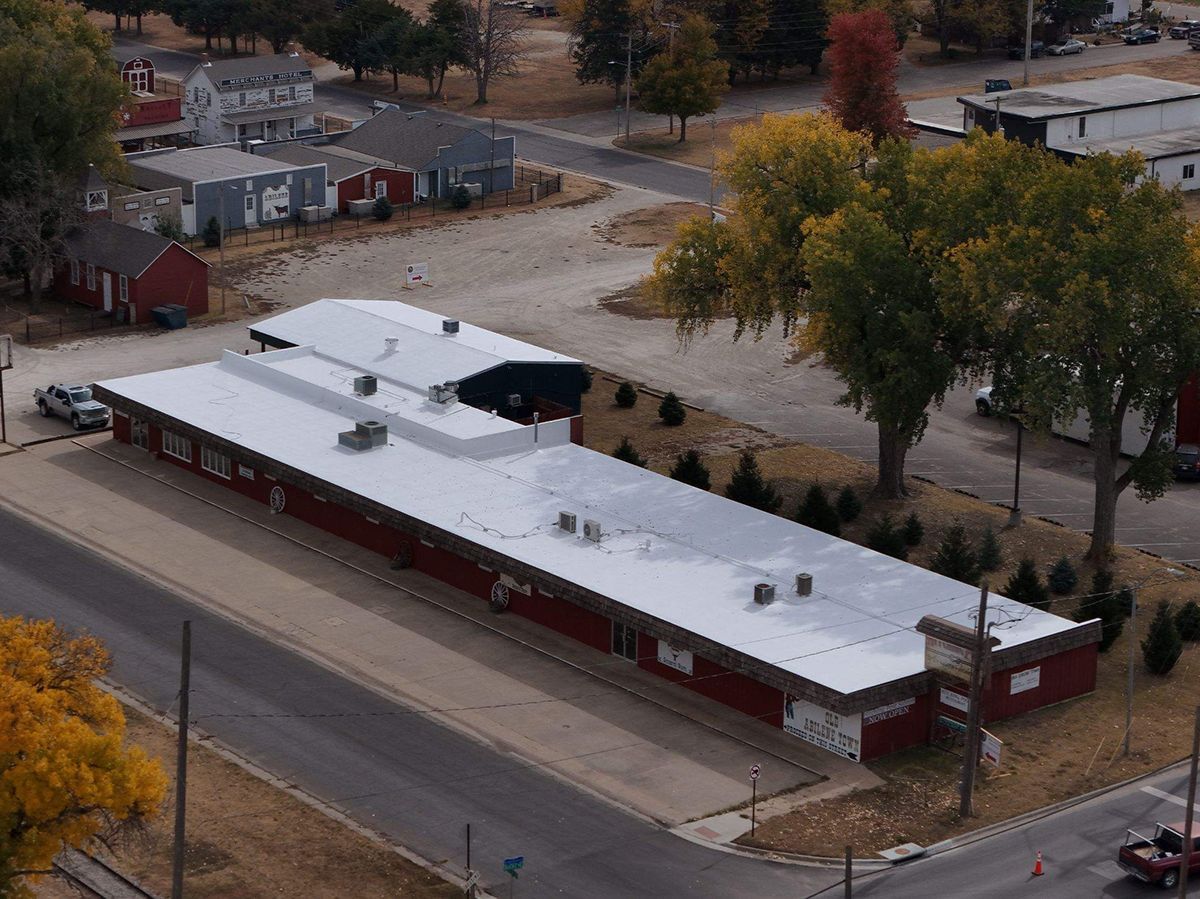
Experts with flat roofs
Repairs, replacements, we do it all
Call (405) 972-5199
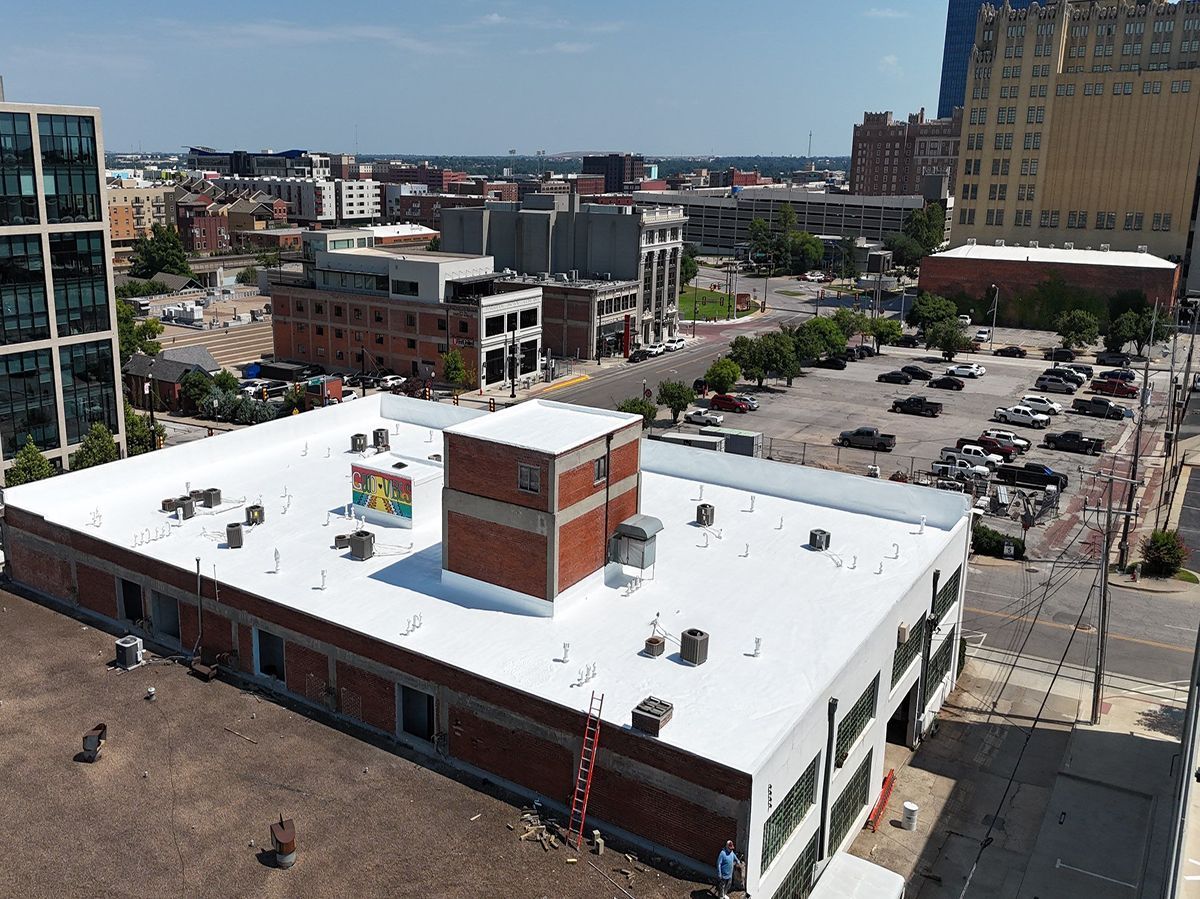
What the Spray Foam System Delivers
The spray foam application begins with surface preparation that removes loose debris and ensures proper adhesion to the existing roof deck. Foam is applied in passes that build up thickness gradually, with each layer bonding to the one below. The density of the foam and the total thickness depend on the insulation values you need and the severity of ponding areas. Higher foam builds redirect water toward drains and scuppers, eliminating the standing pools that accelerate membrane breakdown.
Once the foam cures, the elastomeric coating goes on in multiple passes, creating a continuous, flexible skin over the entire roof surface. You'll notice that water sheets off the roof instead of pooling in low spots, interior ceiling stains stop spreading, and the building's heating and cooling loads drop as the insulation layer blocks thermal transfer. The coating reflects sunlight, keeping roof surface temperatures lower during Oklahoma's summer months and reducing the expansion-contraction cycle that stresses roofing materials.
The system does not address structural issues such as damaged decking or compromised roof framing. If the existing roof structure shows rot or inadequate support, those repairs happen before foam application. Coating reapplication every ten to fifteen years maintains the waterproof layer as UV exposure gradually degrades the surface, but the foam insulation underneath remains intact and functional for decades.
Questions Commercial Property Owners Ask
Flat roofs in Oklahoma City face unique challenges from the region's weather extremes, and the spray foam and coating approach addresses those conditions directly. The following answers clarify how the system works and what you can expect during installation.
What preparation does the existing flat roof need before foam application?
The roof surface must be dry, clean, and free of standing water or loose material. Any wet insulation underneath gets removed, and areas with structural damage are repaired to provide a sound substrate for foam adhesion.
How does spray foam prevent water pooling that causes leaks?
Foam builds thickness in low areas where water collects, creating positive drainage toward roof drains and edges. The seamless application eliminates the seams and fastener penetrations where traditional flat roof membranes fail under standing water.
When is the best time to schedule this work in Oklahoma City?
Late spring through early fall provides the dry, moderate temperatures needed for proper foam expansion and coating cure. Humidity and rain delay the process, so scheduling during Oklahoma's drier months avoids weather-related interruptions.
What does the elastomeric coating actually protect against?
The coating seals the foam against moisture infiltration and UV degradation while providing a reflective surface that reduces thermal stress. It flexes with temperature changes instead of cracking, maintaining a watertight barrier across the entire roof.
How long does the spray foam insulation layer last?
The foam remains structurally sound and maintains insulation value for the life of the building. The coating layer requires reapplication every ten to fifteen years as surface wear occurs, but the underlying foam does not degrade or lose effectiveness over time.
Draper Construction & Commercial Roofing evaluates your building's specific drainage patterns and insulation needs before recommending foam thickness and coating specifications. Request a detailed assessment to address your flat roof concerns and determine the system configuration that fits your property.